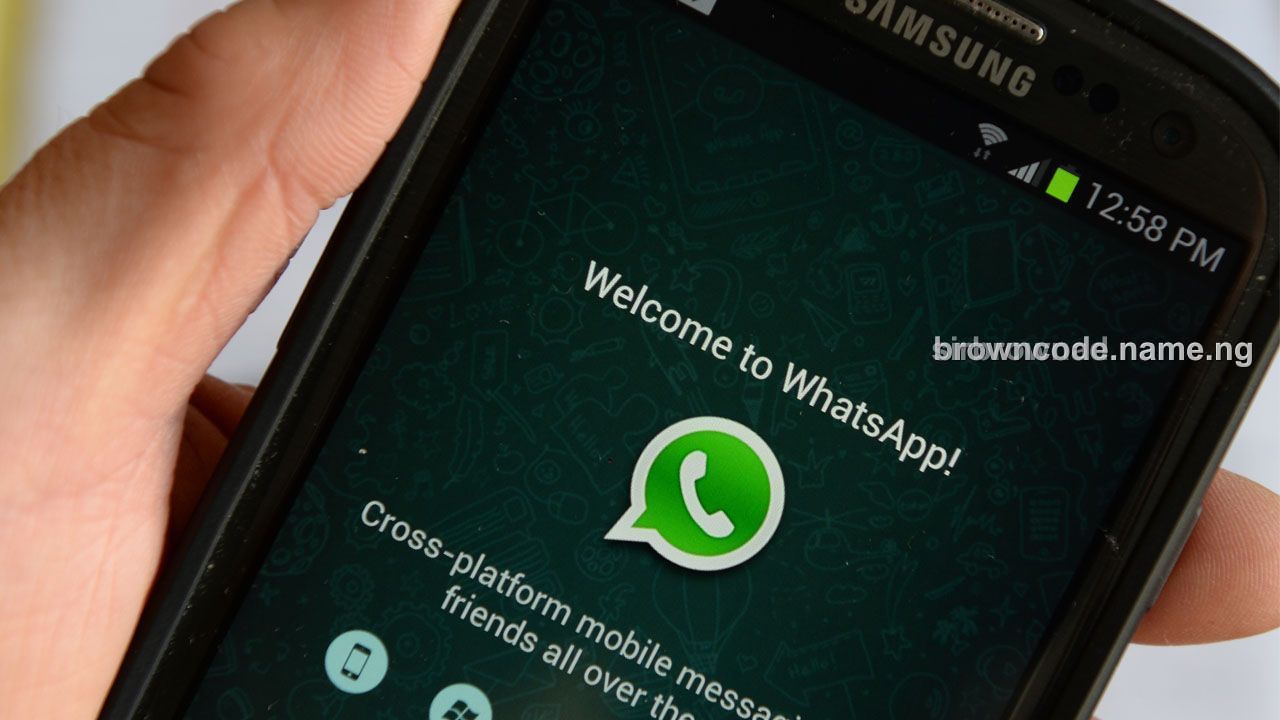
There is a question worth sitting with for a moment: why does a Nigerian trader trust a WhatsApp voice note from a distant contact more than an official SMS from their bank?
The answer is not ignorance. It is not gullibility. It is the product of a deeply rational response to a financial system that has, for decades, given ordinary Nigerians genuine reasons not to trust it.
To understand why fraudsters thrive on WhatsApp in Nigeria, you have to first understand what WhatsApp actually is in this country — because it is not what it is anywhere else in the world.
WhatsApp is not an app in Nigeria. It is the infrastructure of daily life. It is where business happens, where church announcements go, where families stay connected across states, and where information — true and false — travels faster than any news organisation can publish.
How WhatsApp Became Nigeria's Operating System
Nigeria has one of the most active WhatsApp user bases on the African continent. But the depth of its penetration goes far beyond raw numbers. WhatsApp in Nigeria is the primary channel for commerce between small traders and suppliers. It is how landlords communicate lease agreements, how employers send salary confirmations, how local government officials circulate announcements, and how mothers coordinate school runs across three different neighbourhoods.
When data costs dropped in the mid-2010s and cheap Android smartphones flooded the Nigerian market, WhatsApp did not just grow — it replaced entire categories of institutional communication. Bank branches that were hours away by road, formal email addresses that required internet literacy to set up, official hotlines that kept you on hold for forty-five minutes before disconnecting — all of these barriers dissolved when a trader could simply send a voice note to a supplier and receive a payment confirmation on the same screen.
WhatsApp became trusted not because Nigerians are naive about technology. It became trusted because it worked when formal institutions consistently did not.
The Justified Distrust of Formal Financial Institutions
To understand the WhatsApp trust gap, you have to sit with the history honestly.
Nigerian banks have, over the decades, provided their customers with concrete, documented reasons for suspicion. Charges that appeared on statements without explanation. ATM networks that debited accounts without dispensing cash and took weeks to reverse. Customer service lines that required multiple calls, multiple escalations, and multiple weeks to resolve disputes that should have taken hours. Loan products with interest rates buried in fine print. Insurance products sold at bank branches that performed nothing like what was described at the point of sale.
The CBN's own consumer complaint statistics have consistently shown tens of thousands of unresolved disputes lodged against commercial banks annually. The gap between what banks promised and what they delivered was not imagined. It was documented.
Against this backdrop, the WhatsApp group administrator who quickly resolves a payment dispute, who sends voice notes in plain Yoruba or Igbo or Hausa rather than formal banking English, who is personally known to members of the group — this person built genuine trust by being reliably responsive in ways that formal institutions were not.
The Architecture of WhatsApp Trust
What makes WhatsApp uniquely powerful as a trust channel in Nigeria is not the technology. It is the social architecture built on top of it.
Nigerian WhatsApp groups are almost never anonymous. The typical trust chain looks like this: you are added to a group by someone you know personally. That person vouched implicitly for the group by adding you. The group administrator is known to several members. Members know each other through church, through market associations, through alumni networks, through family connections.
This is what researchers call a high-trust social network — a network where credibility travels through personal relationships rather than institutional verification. When information arrives through this network, it arrives pre-loaded with the borrowed credibility of every trusted person in the chain between the source and you.
This is also exactly why misinformation, investment fraud, and financial scams travel through WhatsApp groups with such devastating efficiency. The same architecture that makes a legitimate message trustworthy makes a fraudulent one nearly indistinguishable from it.
How Fraudsters Engineer the WhatsApp Trust Pipeline
A sophisticated Nigerian WhatsApp fraudster does not cold-contact strangers. That approach fails because it has no trust foundation. Instead, the modern WhatsApp fraud operation works by infiltrating existing trust networks and then leveraging the credibility of those networks to distribute fraudulent content.
The infiltration typically happens in one of three ways.
The first is patience. A fraudster joins legitimate community groups — market groups, alumni groups, neighbourhood groups — and participates genuinely for weeks or months. They contribute useful information, they greet members on birthdays and religious holidays, they resolve minor disputes helpfully. They build a social reputation that feels earned because, in a limited sense, it was. Then, once the credibility is established, the fraudulent offer is introduced.
The second is compromise. Fraudsters target WhatsApp accounts of trusted community figures — market women with large contact lists, church deacons, neighbourhood association chairpersons — and take over those accounts using SIM swap attacks or registration phishing. Once they control the account, they have immediate access to every group that person administered and the full weight of that person's reputation.
The third is cloning. A fraudster identifies a trusted community figure and creates a WhatsApp account with the same profile photo, the same display name, and a phone number that differs by one digit from the real person's number. Messages sent from this clone to people in that community arrive looking identical to messages from the real person.
The Voice Note Vulnerability
Of all the features that make WhatsApp uniquely dangerous as a fraud vector in Nigeria, the voice note is the most underappreciated.
Nigerians send and receive voice notes at a rate that is genuinely unusual by global standards. The reasons are practical — typing in a language where autocorrect is unreliable, communicating with people whose reading fluency varies, expressing emotional nuance that text cannot carry. Voice notes are intimate in a way that text messages are not.
They are also nearly impossible to fact-check in real time.
When a trusted contact sends you a two-minute voice note in Yoruba explaining that a particular investment platform is paying everyone in their community and urging you to join before the window closes, your brain is processing multiple signals simultaneously — the familiar voice, the urgency in the tone, the social proof of "everyone in the community," and the fear of missing out. The rational verification steps that might protect you require interrupting this emotional processing, and the fraudster has engineered the message specifically to prevent that interruption.
AI voice cloning technology has now made this threat significantly worse. A fraudster with three seconds of audio from someone's old voice note can generate new voice notes that sound indistinguishable from the real person. This technology is not hypothetical. It is currently affordable and widely accessible.
What Needs to Change
The solution to WhatsApp fraud in Nigeria is not telling Nigerians to trust WhatsApp less. That advice ignores the legitimate reasons WhatsApp became the primary trust infrastructure in the first place.
The solution requires two parallel tracks.
The first is improving the formal financial system to the point where it competes with WhatsApp on trust. Banks that resolve disputes in hours rather than weeks, that communicate in Nigerian languages rather than bureaucratic English, that have customer service channels that actually work — these institutions will reclaim trust from informal channels not by mandate but by earning it.
The second is financial literacy that is specifically designed for the WhatsApp context. Not generic warnings about online scams. Specific education about the social engineering techniques used in group settings, about the voice note vulnerability, about how to verify investment claims independently before acting on group recommendations.
EVERY TIME A NIGERIAN LOSES MONEY THROUGH WHATSAPP FRAUD, IT IS NOT EVIDENCE THAT THEY WERE FOOLISH. IT IS EVIDENCE THAT A SYSTEM FAILED THEM BEFORE THE FRAUDSTER FOUND THEM.
Conclusion
WhatsApp trust in Nigeria was not manufactured by tech companies and it was not created by fraudsters. It was built, gradually and rationally, by ordinary people finding ways to transact and communicate in an environment where formal institutions were unreliable. Fraudsters did not create this trust. They inherited it and learned to weaponise it with precision.
Understanding this is not an academic exercise. It is the foundation of any serious approach to protecting Nigerians from the fraud epidemic that runs through the most intimate channels of their daily digital lives.
Get new Security & Fraud alerts
One email when a new security & fraud article like this one goes live. No spam, unsubscribe anytime.