In December 2016, MMM Nigeria froze the accounts of approximately three million participants. Somewhere between ₦18 billion and ₦100 billion — the estimates vary and the truth will never be fully known — was locked inside a system that its administrators announced was "temporarily on hold." A significant portion of that money was never returned.
Within eighteen months, a meaningful number of the same people who lost money in MMM had joined a new scheme. Some joined multiple new schemes simultaneously.
This is the fact that most discussions of Nigerian investment fraud refuse to sit with honestly: the collapse of any individual scheme does not end the fraud. It feeds the next one.
To understand why, you have to stop looking at individual schemes and start looking at the ecosystem that produces them, sustains them, and ensures that no exposure — however public, however devastating — ever fully destroys the conditions that allow the next scheme to launch.
MMM did not create Nigerian Ponzi culture. It revealed that the infrastructure for mass investment fraud already existed — in our WhatsApp groups, in our churches, in our social trust networks — and that it was ready to be used by whoever arrived next with the right pitch.
What a Ponzi Scheme Actually Is
Before going further, it is worth being precise about the mechanics, because the language around these schemes is often deliberately confused.
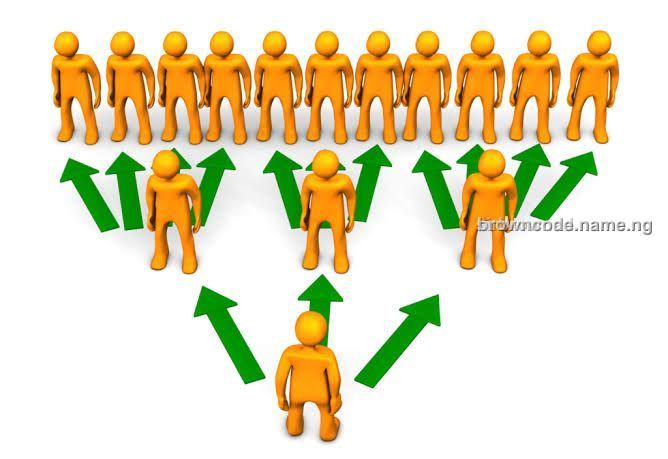
A Ponzi scheme is a system where returns paid to existing investors come not from genuine investment activity — not from trading, not from business profits, not from interest on loans — but from the capital contributed by new investors. The operator takes a percentage. Early investors receive payments that feel like returns. These payments are funded entirely by later investors' deposits.
The scheme requires perpetual growth to survive. As long as new money coming in exceeds old money going out, the operator can maintain the illusion of returns. The moment new investment slows — because the pool of potential recruits has been exhausted, because publicity causes hesitation, or because the operator chooses to exit — the scheme collapses. The people at the bottom of the recruitment chain, who joined when the pool was nearly full, almost always lose everything.
This is not a complex or obscure structure. It has been documented since Charles Ponzi ran his postal coupon scheme in Boston in 1920. Every major Nigerian investment fraud scheme operates on this identical mechanism, regardless of what it calls itself — peer-to-peer giving, mutual aid, matrix gifting, crypto arbitrage, forex trading, agricultural investment, real estate development.
The packaging changes. The mathematics does not.
MMM: The Template
MMM — Mavrodi Mondial Moneybox — was created by Russian fraudster Sergei Mavrodi, who had already run the original MMM scheme in Russia in the 1990s, causing losses estimated at over one billion US dollars and triggering what some analysts describe as a contributor to the Russian financial crisis of that era. Mavrodi was convicted of fraud, served time in prison, and then relaunched variations of the scheme in multiple countries across Africa and Asia.
When MMM launched in Nigeria in 2015, it was not an unknown entity. Its history was publicly documented. Mavrodi had not hidden his identity or his previous convictions. The Russian collapse was covered in international media. None of this information was secret or difficult to access.
MMM Nigeria grew to approximately three million participants regardless.
Understanding why requires honest engagement with several factors that Nigerian commentators have sometimes been reluctant to discuss directly.
The participation incentive was real, for early joiners. MMM promised thirty percent monthly returns. In the early phases of the scheme, it delivered them — because early joiners' returns were funded by the rapidly growing pool of new participants. People who joined in 2015 and withdrew before the December 2016 freeze made money. Real money. Their testimonials were not lies. The scheme functioned as advertised for long enough to generate a substantial base of genuine positive experience that could be shared honestly.
The social proof was overwhelming. By mid-2016, MMM Nigeria had penetrated every social stratum. Educated professionals, market traders, civil servants, university students — the scheme crossed class and education lines in a way that made scepticism feel like isolation. When everyone around you is participating and reporting returns, the rational calculation shifts. The question is no longer "is this legitimate?" but "can I afford to miss this?"
The formal economy was offering nothing comparable. Nigerian bank savings accounts were offering interest rates that, after inflation, produced negative real returns. The formal stock market was inaccessible to most Nigerians without significant capital and expertise. Pension systems were widely distrusted following years of mismanagement. MMM offered thirty percent monthly returns in an environment where the formal financial system was offering essentially nothing. The gap between those two numbers explains a significant part of the participation.
The Collapse and the Relaunch Cycle
When MMM froze Nigerian accounts in December 2016, citing "Christmas stress" on the system, the initial response from many participants was patience. The scheme's administrators had built enough spiritual and emotional framing into their communications — including explicit references to faith and community — that many participants interpreted the freeze as a temporary obstacle rather than a terminal collapse.
MMM Nigeria relaunched in January 2017. A significant number of people who had been frozen rejoined.
The scheme eventually collapsed permanently in mid-2017. Mavrodi died in 2018.
But here is the critical observation: the infrastructure that allowed MMM to reach three million Nigerian participants in less than two years did not collapse with the scheme. The WhatsApp groups remained. The church networks that had circulated MMM testimonials remained. The community leaders who had vouched for the scheme retained their social positions. The psychological pattern — the combination of financial desperation, social proof, and community pressure that had driven participation — remained entirely intact.
All of this infrastructure was immediately available to the next scheme that arrived with a plausible pitch.
The Schemes That Followed
The list of major Nigerian investment fraud schemes that launched, grew, and collapsed in the years following MMM's fall is long. It includes Loom, which repackaged the Ponzi mechanism as a "blessing circle" using WhatsApp voice notes and church community networks and collapsed within months of its 2019 Nigerian launch. It includes Racksterli, which used aggressive social media marketing and influencer endorsements to recruit participants before collapsing in 2020. It includes multiple "forex trading" and "crypto arbitrage" schemes that dressed Ponzi mechanics in the legitimating language of financial technology.
Each of these schemes was different in its surface presentation. Each used the same underlying infrastructure: WhatsApp distribution networks, community trust chains, early investor testimonials, and the same mathematical certainty of eventual collapse.
Why Exposed Schemes Survive Exposure
There is a question that anyone who has watched the Nigerian Ponzi cycle must eventually ask: why does public exposure not stop participation?
Several factors operate simultaneously.
Information reaches communities unevenly.
A warning published in an English-language newspaper in Lagos does not reach a market trader in Kano who receives all her financial information through a Hausa-language WhatsApp group. The infrastructure of fraud distribution is more efficient at reaching its target audience than the infrastructure of fraud warnings.
Early participants have genuine positive testimony.
When a scheme collapses and its fraud is exposed, there is a population of genuine early participants who made money. These people do not experience themselves as fraud victims. They experience themselves as successful investors who got in early and got out in time. Their testimony — honest from their perspective — actively contradicts the fraud narrative for people in their communities.
The economic conditions that drive participation do not change.
The desperation that makes thirty percent monthly returns feel like a rational risk is driven by unemployment, inflation, inadequate formal financial products, and structural economic exclusion. None of these conditions were addressed by MMM's collapse or by the exposure of any subsequent scheme. The demand that fraud exploits remains constant because its root causes remain unaddressed.
Rebranding makes schemes unrecognisable to people who only know the previous name.
A person who lost money in MMM and knows to avoid "MMM" will not necessarily recognise the same mechanics operating under a completely different name with different administrators and different surface packaging. The exposure of the brand does not transfer to recognition of the underlying structure.
The Role of Promoters
One dimension of the Nigerian Ponzi ecosystem that receives insufficient attention is the role of active human promoters — the people within communities who actively recruit participants, not as victims, but as incentivised distributors.
Most Nigerian investment fraud schemes operate on a referral commission structure. Participants who recruit new members receive a percentage of those members' deposits. This structure creates a population of people within communities who have a direct financial incentive to downplay risks, counter scepticism, and actively drive participation.
These promoters are not always cynical operators who know the scheme is fraudulent. Some are genuine believers who have received real early returns and interpret their success as validation. Others understand the mathematics well enough to know they need to recruit and exit before collapse, and do so deliberately at the expense of their communities.
In both cases, the promoter network is the primary distribution mechanism of the fraud. And the promoter network is made up of people who are already trusted members of communities — colleagues, family members, church brethren, neighbours.
WHEN YOUR COUSIN RECRUITS YOU INTO AN INVESTMENT SCHEME, THE FRAUD IS USING YOUR MOST TRUSTED RELATIONSHIP AS ITS DISTRIBUTION CHANNEL. THIS IS NOT AN ACCIDENT. IT IS THE DESIGN.
What Would Actually Break the Cycle
The honest answer is that no single intervention breaks the Ponzi cycle in Nigeria. It requires simultaneous action across multiple fronts.
Regulatory enforcement with real consequences. The EFCC has prosecuted individual scheme operators, but the prosecutions are slow, the sentences are inconsistent, and the proceeds of fraud are rarely fully recovered and returned to victims. Faster prosecution with asset recovery that visibly returns money to victims would change the risk calculation for operators.
Financial products that compete with the fraud. If the formal financial system offered products that provided genuine, sustainable, higher returns to ordinary Nigerians — simple, accessible investment products with reasonable yields — the gap that fraud exploits would narrow. This requires regulatory innovation and genuine commitment from the financial sector to serve the mass market.
Community-level financial literacy that names specific schemes and specific mechanics. Generic "be careful of fraudsters" warnings do not work. Education that specifically describes the Ponzi mechanism, that shows communities how to identify it regardless of the branding, and that is delivered through the same WhatsApp and church channels the fraud uses — this is the education that could make a difference.
Platform accountability. WhatsApp and other social platforms benefit from the engagement that fraud-related content generates. Requiring these platforms to fund and operate genuine fraud detection and removal systems in Nigerian languages would reduce the efficiency of WhatsApp as a fraud distribution network.
Conclusion
MMM is not a Nigerian story. It is a global story about a mathematical structure that always collapses and always hurts the people at the bottom of the recruitment chain the most. Nigeria's version of that story is particularly painful because the country's specific combination of financial exclusion, informal trust networks, and economic desperation created near-perfect conditions for mass participation.
But understanding that context is not the same as accepting it as unchangeable. The infrastructure of Nigerian Ponzi fraud — the WhatsApp groups, the church networks, the promoter chains, the psychological patterns — is built on human decisions and human relationships. It can be understood, interrupted, and over time, dismantled.
The work starts with refusing to look away from how it actually operates.
Get new Security & Fraud alerts
One email when a new security & fraud article like this one goes live. No spam, unsubscribe anytime.